
- 071 372 0667
- info@gauraconstruction.lk
A practical guide to mechanical, electrical and plumbing work, and why it needs to be planned early.
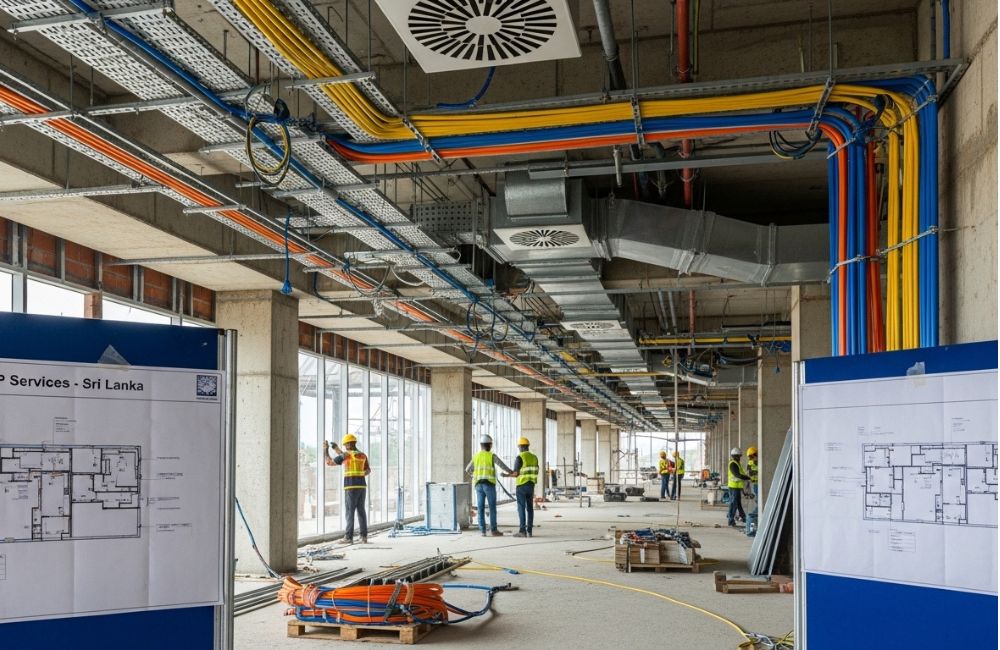
MEP stands for Mechanical, Electrical, and Plumbing - the systems that make a building actually livable and functional once the walls and roof are up. It's easy for homeowners to focus on tiles, paint colours, and furniture, but MEP work is what determines whether your water pressure is reliable, your electrical system is safe, and your building stays comfortable year-round.
As the best construction company in Sri Lanka, Gaura Construction treats MEP as a core discipline, not an afterthought bolted on after the structural work is finished.
Mechanical work includes HVAC (heating, ventilation, and air conditioning) systems, mechanical ventilation, and any equipment that manages airflow and temperature. Electrical work covers wiring, distribution boards, lighting circuits, backup power, and safety systems like earthing and circuit protection. Plumbing covers water supply, drainage, sanitary fittings, hot water systems, and rainwater management.
One of the most common - and expensive - mistakes in construction is treating MEP as a late-stage add-on. Pipe and conduit routing needs to be planned alongside the structural design, because retrofitting plumbing or electrical runs into finished walls means breaking tiles, chasing concrete, and redoing finishes that were already completed.
When MEP is integrated into the design from day one, conduits and pipe runs can be cast into slabs and walls cleanly, access points for maintenance can be planned properly, and the finished result looks and functions far better.
A beautiful house with poor MEP work is a house you'll be calling a contractor back to fix within the first year. - Gaura Construction
Low or inconsistent water pressure, overloaded circuits that trip breakers, inadequate provision for air conditioning units, drainage that doesn't account for heavy monsoon rainfall, and exposed conduit runs that were never planned into the original design are all signs of MEP work that was treated as an afterthought rather than a core part of the build.
For homes, good MEP planning means correctly sized water tanks and pumps, safe and properly distributed electrical loads, provision for future air conditioning or solar installation, and drainage systems designed for Sri Lanka's rainfall patterns. These details rarely show up in a floor plan, but they shape day-to-day comfort far more than most finishes do.
Commercial and industrial buildings have significantly higher MEP demands - three-phase power distribution, fire safety systems, larger HVAC installations, and plumbing systems designed for higher occupancy. These systems must also comply with relevant safety codes and often require coordination with utility providers before construction even begins.
When the same company managing your structural and finishing work also manages MEP, there's a single point of accountability for how everything fits together - no gaps between separate contractors, no disputes about whose work caused a leak or a wiring fault. Our MEP services in Sri Lanka are delivered by the same project team handling the rest of the build, so systems are coordinated from design through to final testing and handover.
MEP work is invisible when it's done well, and expensive to fix when it isn't. Whether you're building a new home, renovating an existing property, or developing a commercial project, planning mechanical, electrical, and plumbing systems from the earliest design stage - rather than treating them as a final checklist item - is one of the best investments you can make in a building's long-term reliability.